
How to Make Your Drums Sound Like RÜFÜS DU SOL in Ableton Live
Jun 07, 2026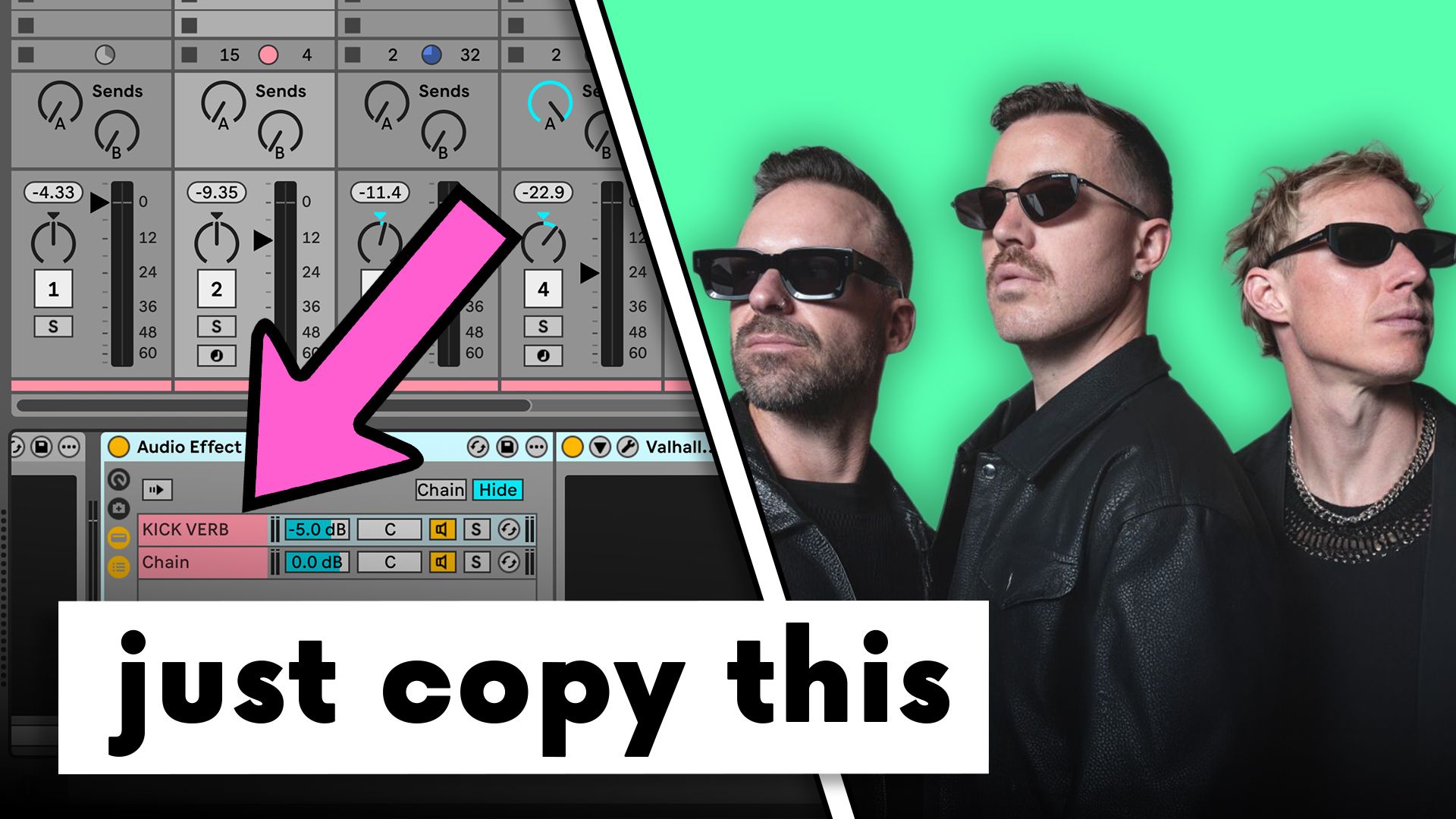
RÜFÜS DU SOL drums don't sound like a loop.
They sound alive, like something that keeps moving and shifting underneath the track.
If you want to make your drums sound like RÜFÜS DU SOL in Ableton Live, the first thing to get straight is that the sound doesn't come from 1 plugin or 1 clever trick.
It comes from a stack of small decisions.
The kick, the hats, the backbeat, and the percussion that lives on top of all of it.
I've spent a long time pulling this sound apart in Ableton, chasing the weight in the kick and the movement in the percussion.
Here is how the whole drum ecosystem goes together, piece by piece, so you can build it into your own track.
How to Build the RÜFÜS DU SOL Kick in Ableton
The kick is everything here.
The sub and the weight of the whole mix lives in it, and if the kick is wrong then nothing else matters.
I start with Kick 3.
You can build a kick from scratch in it, and that is easier than it sounds.
The default preset, tuned to the key of your track, already sounds massive.
There are a lot of presets in there as well if you want to move fast.
The sub, the body and the click sit as separate layers, kept in phase and in tune.
It is a full kick production setup inside 1 plugin.
But RÜFÜS DU SOL kicks are a different animal, so this is where it gets interesting.
Producers have been doing this since the start.
Find an extended club mix and sample the kick straight off the record, so you are starting with the real thing.
Kick 3 handles that well.
Drag your sample in, it analyses it and rebuilds it, and from there you retune it to your key, reshape the layers, tweak the click, add some EQ and limit it.
Their kick, your track, in tune.
To get real weight behind it there is 1 more plugin worth having.
Kick Tweak.
This is a tip straight from Cassian.
It is preset buttons and a wet and dry knob, and that is it.
What it does under the hood would take a long chain of expensive plugins to even get near.
I have tried it that way, and it never hit as hard as this does.
Why RÜFÜS DU SOL Put Reverb on the Kick
Here is the problem with a massive kick.
It has a habit of swallowing everything around it, the vocal and the synths included.
Pull it back and you lose the energy.
Leave it and it dominates.
So how does the RÜFÜS DU SOL kick hit that hard and still sit so cleanly?
Reverb on the kick drum.
Cassian dropped this in a lockdown livestream, and at the time I thought it was completely illegal in the production world.
The reason most people get it wrong is that they reach for a normal stereo reverb and drop it straight on.
That turns the low end to mud.
Run it in parallel instead, and use a plate reverb set to mono so the low end stays tight and club ready.
Valhalla Plate is what I use, though Ableton's own reverb inside an Audio Effect Rack does the same job if you set it to mono.
Roll the top end off so the reverb only hits the sub and the body, then blend it in to taste, sitting well under the dry kick.
It is subtle, and you need a decent pair of headphones to hear it properly.
That is the whole point.
I have broken the whole thing down step by step, including how to save the rack as a preset, in my full guide to reverb on a kick drum the Cassian way.
How to Make the Hi-Hats Move and Groove
Most producers drop a 909 hi-hat on the offbeat and leave it there.
RÜFÜS DU SOL don't.
Listen closely and there are several layers of hi-hat doing slightly different things, with different grooves and textures, and it still never feels busy or crowds the vocal.
The first move is that the hi-hat is not sitting dead centre.
It is nudged slightly to the right, the way a live kit sits in a room.
There is a real drummer in this band and it shows, and that small shift carves out the centre of the mix so the vocal has a clean lane.
For the main hat I use the Samples From Mars 909 rack.
You can treat it like a real 909 and automate the hat opening and closing over time, and that push and pull is what gives it movement instead of a static repeat.
Then layer in some syncopated hats.
Short closed 808s work, because the short tail accents the offbeat without cluttering anything, and you pan them left and right to build width across the stereo image.
Once you have width and movement, add a shaker to tie it together.
This is where the Splice integration inside Ableton earns its place, because you can browse and audition shakers against your track in real time until one locks in.
The band have said in interviews they like MIDI shakers, but use whatever fits your song.
One last thing on the shaker.
Switch the sample to Beats mode and trim the tail back so it is tight and percussive.
Why RÜFÜS DU SOL Avoid Claps and Snares
This one is short, but it matters.
RÜFÜS DU SOL almost never use a 909 clap or a standard snare.
They go for a rim shot or a wooden block instead.
The reason is the vocal.
A snare is full of frequencies that sit right in the vocal range, so every time it lands on the 2 and the 4 it is fighting the vocal for the same space.
Swap it for a rim shot or a wooden block and that space opens back up.
It also sounds cooler.
Back into Splice for this.
Search rim shot, search wooden block, and audition until something jumps out at you.
Drop it in and listen to how much room the vocal suddenly has.
How to Make Drums Feel Alive With Ear Candy
Strip a RÜFÜS DU SOL beat right back and the pattern is simple.
Kick on the 1, hi-hat on the offbeat, snare on the 2 and the 4.
That is the foundation, but it is not what you are hearing on the records.
What sets them apart is everything that lives on top of that foundation.
Claps, reverse white noise hits, little percussive textures.
The trick is that these do not loop every 4 bars like most electronic drum patterns.
They play out over much longer stretches.
A clap fill every 8 bars.
A knocking rhythm every 16.
Some elements that only show up once every 32.
That is what gives the drums a storytelling arc.
The pattern is evolving rather than looping, and the ear keeps getting pulled forward without quite knowing why.
You have 2 ways into this.
Splice loops work well, so find something that locks with your groove and sits it on top.
Or you resample your own, using a delay to manipulate the feedback and timing, recording the output, then chopping it up and dropping the pieces in where they feel right.
The whole job of this section is to kill repetition.
Nothing should feel pinned to a fixed loop, and every time the ear thinks it knows what is coming, something shifts.
That is the part of drum sound design that turns a static melodic house loop into something a listener stays with.
Key Takeaways for RÜFÜS DU SOL Style Drums
- The sound is a stack of small decisions, not a single plugin. Every choice across the kick, hats and percussion adds a layer, and the result is the sum of all of them.
- Build the kick first and give it real weight. Sculpt or sample it in Kick 3, then add the thump with Kick Tweak before anything else goes in.
- Reverb on the kick is a finishing move, not a mistake. Keep it parallel, mono and rolled off at the top, blended well under the dry signal so it sits the kick back without muddying the low end.
- Hi-hats earn their movement from panning and automation. Nudge the main hat off centre, automate it opening and closing, and pan the syncopated layers wide.
- A rim shot or wooden block protects the vocal. Dropping the standard snare clears the frequencies the vocal needs on the 2 and the 4.
- Ear candy over 8, 16 and 32 bars is what makes RÜFÜS DU SOL style drums feel alive. Long, evolving percussive layers stop the loop sounding like a loop.
Final Thoughts on Making Drums Sound Like RÜFÜS DU SOL
If you want to make your drums sound like RÜFÜS DU SOL, the work is in stacking these decisions and letting the percussion evolve, not in hunting for a secret plugin.
Build the kick and give it weight.
Sit it in the mix with a touch of parallel reverb.
Give the hats movement and width.
Protect the vocal with the backbeat.
Then keep the layers on top shifting over long stretches.
Do that across the whole kit and the loop stops sounding like a loop, and the drums start to move on their own.
That alive quality runs through their synths too, and the same stock plugin thinking gets you most of the way there.
Frequently Asked Questions
What genre is RÜFÜS DU SOL?
RÜFÜS DU SOL are an Australian trio formed in Sydney in 2010, and their sound sits in melodic house, with roots in alternative dance and deep house.
Their tracks tend to land around 120 to 124 BPM, though slower songs like Innerbloom drop to about 116.
The production blends electronic programming with live instrumentation, which is a big part of why the drums and grooves feel less rigid than a lot of dance music.
Do RÜFÜS DU SOL use a live drummer?
Yes.
James Hunt plays drums in the band, alongside Tyrone Lindqvist on vocals and guitar and Jon George on keys and production.
That live drumming background feeds straight into the programmed parts, which is why details like the hi-hat sitting slightly off centre show up in the recorded tracks.
When you are recreating the sound, leaning into that human feel matters more than getting every hit perfectly on the grid.
Do you need expensive plugins to make RÜFÜS DU SOL style drums?
No.
The plugins in this guide, Kick 3, Kick Tweak and Valhalla Plate, make the process faster, but none of them are essential.
The sound comes from the decisions and the way the percussion evolves, not from owning a specific plugin.
If you have got Ableton and a decent set of headphones, you have enough to get most of the way there.
The tools save time, they do not create the result on their own.
Can you make RÜFÜS DU SOL drums with Ableton stock plugins only?
Mostly, yes.
For kick weight, Drum Buss does a similar job to Kick Tweak using its Drive and Boom controls.
For the parallel reverb, Ableton's own Reverb inside an Audio Effect Rack, set to mono and rolled off at the top, gets you close to the Valhalla Plate approach.
Utility with Bass Mono keeps the low end tight, and EQ Eight handles the shaping.
Splice loops cover the ear candy.
The paid tools are convenience rather than a requirement.
What tempo are RÜFÜS DU SOL songs?
Most RÜFÜS DU SOL tracks sit around 120 to 124 BPM, which is typical melodic house territory.
Some of their bigger songs go slower, with Innerbloom sitting near 116 BPM.
If you are building a beat to match the feel, starting somewhere around 120 to 122 BPM gives you the space their grooves need.
The tempo is only part of it though, because the movement in the drums does as much work as the speed does.
What does Cassian use to get the RÜFÜS DU SOL sound?
Cassian is the studio mix engineer on most of RÜFÜS DU SOL's records and the first artist signed to their Rose Avenue label.
2 of his moves run through this guide.
He uses the Kick Tweak trick for weight on the kick, and parallel reverb to sit the kick back without losing the low end.
His approach leans on subtle, parallel processing across the kit rather than 1 dramatic plugin doing all the work.
That restraint is a big part of the polish on their drums.
About the Author
Craig Lowe is a professional touring playback engineer and Ableton Live educator based in the UK.
He teaches at ICMP, BIMM and ThinkSpace Education, with touring credits including Sam Fender, Melanie C and Years & Years.
He runs Push Patterns, a music production education brand at pushpatterns.com.
If you are interested in learning Ableton Live 12 or the Push 3 in a bit more detail, check the course here:
